
Microplastics: 10 Practical Ways To Cut Your Exposure This Week
Microplastics are now in human blood, lungs, placenta. Here are 10 small changes that meaningfully reduce your daily exposure, most of them free.
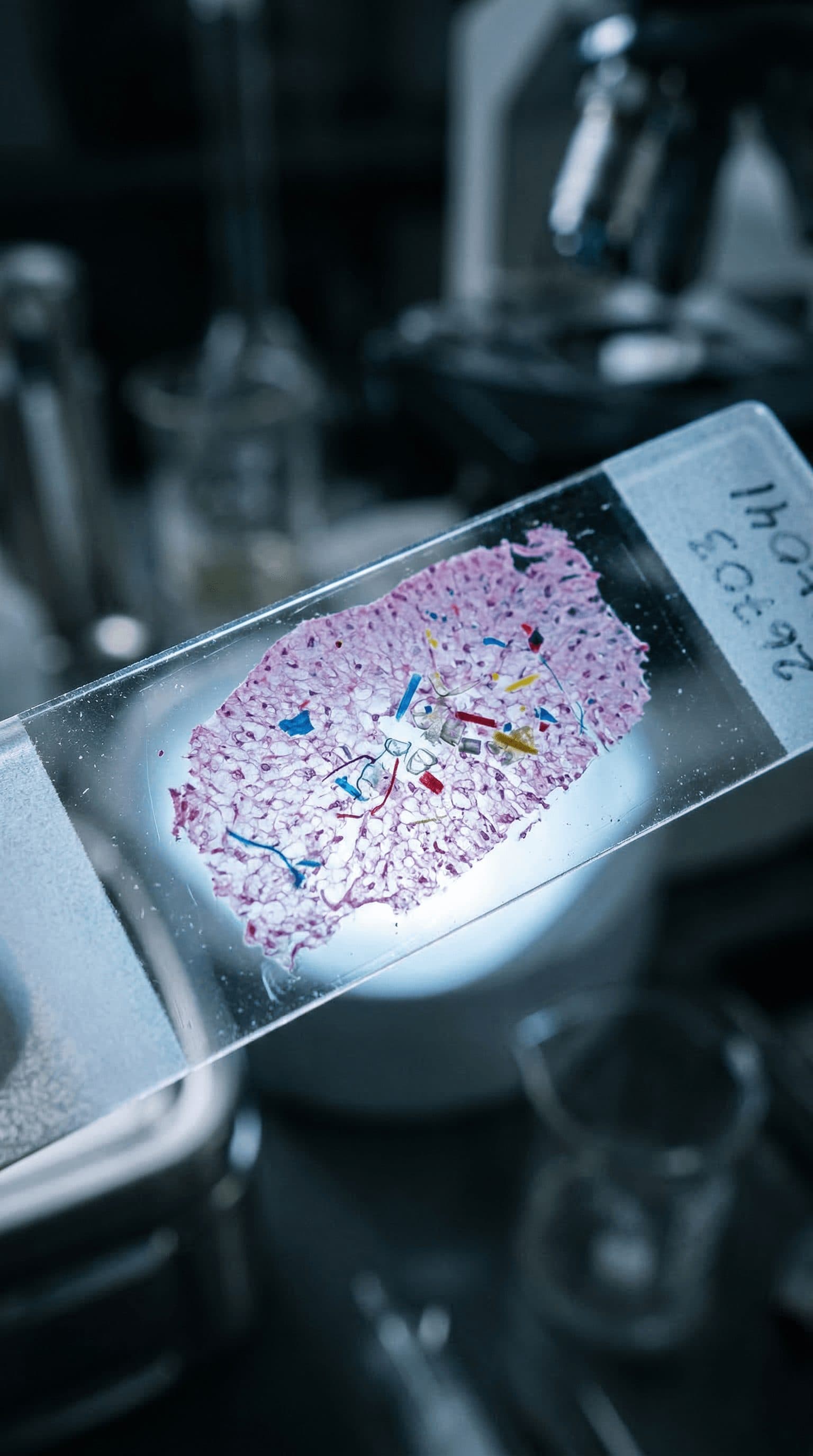
Microplastic particles have now been documented in human blood [1], lungs, placenta [6], and brain tissue. We are eating, drinking, and inhaling somewhere between 50,000 and 250,000 plastic particles a year. The full health implications are still being worked out by science. The sensible response, given asymmetric cost-benefit, is to cut down obvious daily sources without making it your personality.
Below are 10 practical changes you can make this week. Most are free. Most take less than 60 seconds. Most you'll only do once and then you're done forever. We've rated this as "studies suggest": the contamination evidence is strong, but the disease-causation evidence is still being established. That's our honest read.
1. Stop using plastic chopping boards
A 2023 study found that a single year of normal use of a polypropylene chopping board can shed tens of millions of plastic particles directly onto your food [4]. The plastic doesn't disappear when you rinse it; it's been knife-scratched off the board and onto your dinner.
Fix: wood (acacia, beech, end-grain) or glass. £15 once and forever.
2. Never microwave plastic
Heat dramatically accelerates microplastic shedding from any plastic container. Microwaving plastic is the fastest way to actively dose yourself.
Fix: decant food onto a ceramic plate or into a glass container before microwaving. Takes ten seconds.
3. Skip the plastic teabag
Pyramid mesh teabags (the "premium" silky ones) are typically nylon or PET. A 2019 study found a single bag releases approximately 11.6 billion microplastic particles into one cup of tea at brewing temperature [2].
Fix: loose-leaf tea with a stainless-steel infuser. The tea is also better. Or paper teabags from a brand that explicitly states they don't seal with plastic.
4. Stop drinking from disposable paper cups
Paper takeaway cups are lined with a thin plastic film to make them waterproof. A 2023 study found this lining releases millions of microplastic particles into hot drinks within minutes [3].
Fix: carry a reusable steel or glass cup. Most coffee shops will fill it. Bonus: most give you a small discount.
5. Switch from bottled water
A 2024 study using new analytical methods found bottled water contains roughly 240,000 nanoplastic particles per litre, orders of magnitude more than previously detected [5]. Some particles are small enough to cross cell membranes.
Fix: filtered tap water in a glass or stainless-steel bottle. Reverse-osmosis filtration is the gold standard if you can fit one.
6. Replace plastic food storage with glass
The single biggest microplastic exposure most people have is hot food touching plastic, leftovers in plastic containers, takeaway in plastic clamshells.
Fix: Pyrex or similar glass containers with silicone or bamboo lids. Buy a stack once. Done forever.
7. Don't use plastic kettles
Most consumer kettles still have plastic interiors that contact boiling water multiple times daily.
Fix: stainless-steel-interior kettle (or stovetop). £30-50 one-time spend.
8. Skip plastic-handled cooking utensils touching hot food
Plastic spatulas. Plastic spoons stirred through hot pans. Heat plus contact equals shed.
Fix: wood, bamboo, or stainless steel. Charity-shop wooden spoons are practically free.
9. Be cautious with cling film
The clinginess comes from plasticisers that migrate into fatty foods. Particularly bad on cheese, meat, and oily leftovers.
Fix: beeswax wraps, glass containers with lids, or just a plate over the bowl.
10. The big one: take your shoes off indoors
Outdoor air carries tyre wear and synthetic textile microparticles. Shoes track these inside, where they accumulate in carpet and house dust. Indoor air can carry more microplastics than outdoor in many homes.
Fix: shoes off at the door. Vacuum with a HEPA filter. Wet-mop hard floors.
What we don't bother with
| Often-recommended | Why we skip it |
|---|---|
| "Microplastic-removing supplements" | No credible evidence; mostly marketing |
| Avoiding all packaged food | Practically impossible; pick your battles |
| Filtering air through home-purifiers chasing PM2.5 | Useful for general air quality but not specifically for microplastic |
| Refusing all synthetic clothing | Some impact (laundry shedding) but minor relative to the kitchen wins above |
The bottom line
Six of the ten fixes above are free. The other four are one-time spends under £50 each. Together they probably cut your daily microplastic exposure by 60-80%, based on current research on source contributions. The science is still maturing, but the cost of acting now is essentially zero, and the cost of waiting if it turns out to be serious is high.
Start with the chopping board, the kettle, and the teabags this weekend. The rest can roll out over the month.
References
- [1]Discovery and quantification of plastic particle pollution in human blood — Environment International (2022)
- [2]Plastic teabags release billions of microparticles into a cup of tea — Environmental Science & Technology (2019)
- [3]Rapid-release of microplastics from disposable paper cups — Journal of Hazardous Materials (2023)
- [4]Plastic chopping boards as a source of microplastics — Environmental Science & Technology (2023)
- [5]Rapid identification and quantification of nanoplastics in bottled water — Proceedings of the National Academy of Sciences (2024)
- [6]Microplastic contamination of human placenta — Environment International (2021)
- [7]Microplastic release from heated plastic baby feeding bottles — Nature Food (2020)
The TFC letter
Get the next one before the algorithm decides for you.
One email when we publish something genuinely useful. Written like this post: cited, honest about the evidence, no spam.
Keep reading
Educational content. Not medical advice. See our terms for the full disclaimer.